
Corrugated material guide
Cardboard Boxes: Board, Flutes & Uses
Understand what people mean by “cardboard box”, how corrugated liners and fluting work, and when single- or double-wall construction is appropriate.
Cardboard boxes are so common that it is easy to forget how clever they are. The humble brown box carries goods across the world, stacks metres high in warehouses, and folds flat to save space, all from paper. The secret is the wavy layer hidden inside the board.
Understanding a few basics, the material, the flutes, and single versus double wall, helps you choose a box that protects your goods without paying for more than you need. This guide covers what cardboard boxes are made of, how flutes work, the difference between single and double wall, the common box styles, and how to pick the right one.

What Are Cardboard Boxes Made Of?
This structure is what separates a strong shipping box from thin card. The fluted middle gives cushioning and stacking strength, while the outer liners keep the shape and provide a clean surface for printing and labels. It is lightweight, recyclable, and surprisingly strong for its weight.
What Are Corrugated Flutes?
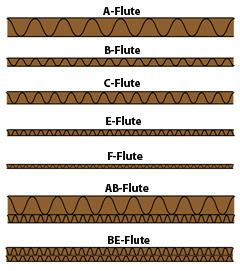
C-flute is the everyday standard for shipping boxes and regular slotted cartons, offering a good balance of strength and printability. B-flute is a little thinner and prints well, while A-flute is the thickest and cushions the most. E and F flutes are thin and dense, which suits retail and premium printed packaging rather than heavy loads.
Single Wall vs Double Wall Cartons
Single wall board is the most common and the most economical, and it still provides the rigidity and cushioning a shipping carton needs. Double wall board adds a second flute layer, which roughly doubles the resistance to crushing and lets the box carry more weight over more trips. All of our moving cartons use double wall board, and they arrive flattened and packed in tens.
Common Cardboard Box Styles
The RSC is the box most people picture, with flaps that open on the top and bottom. To learn how it is built, see our guide on the RSC box. Die-cut boxes use custom cuts for complex shapes and fold together neatly, taking up minimal storage space when flat packed.
How to Choose the Right Cardboard Box
Think about weight, fragility, and how the boxes will be stacked or stored. A box that is too big wastes cushioning and can collapse under a stack, while a box that is too small strains the seams. For shipping goods safely, see our guide on shipping boxes, or browse our range of double wall carton boxes for ready sizes and prices.
Conclusion
A cardboard box is far more engineered than it looks. The corrugated flutes give it strength, the wall type sets how much it can carry, and the style decides how it fits your product. Match those three to your goods and you get reliable protection without overspending. If you are not sure which board or size fits your needs, tell us what you are packing and we will point you to the right box.
Common questions
Cardboard Box FAQs
What is a cardboard box made of?
A shipping cardboard box is made of corrugated fiberboard: a wavy fluted layer glued between two flat liners. The flutes act like columns that absorb shock and give the box its strength, while the liners hold the shape and take printing.
What is the difference between single wall and double wall cardboard boxes?
A single wall box has one fluted layer between two liners and suits lighter goods. A double wall box has two fluted layers and three liners, giving much greater strength and stacking resistance for heavy items and for moving house.
What are corrugated flutes?
Flutes are the wavy arches inside corrugated board. Common sizes are A, B, C, E, and F. Larger flutes such as A and C give more cushioning and stacking strength, while finer flutes such as E and F give a smoother surface for printing.
How much weight can a cardboard box hold?
There is no reliable universal capacity based only on single- or double-wall construction. Box dimensions, board grade, flute combination, moisture, handling and load distribution all affect performance. Confirm the specification for heavy or critical contents.
Is there a difference between cardboard and corrugated?
Yes. In everyday use people say cardboard, but shipping boxes are corrugated fiberboard, which has a fluted middle layer. Thin card with no flutes (like a cereal box) is paperboard, and it is far weaker than corrugated board.